
When a loaded tractor-trailer goes down on the I-17, the clock starts immediately. Every minute the rig sits on the shoulder is money lost for the carrier, a hazard for passing traffic, and — on a grade like the climb out of the Valley — a real safety problem for the recovery crew.
The call
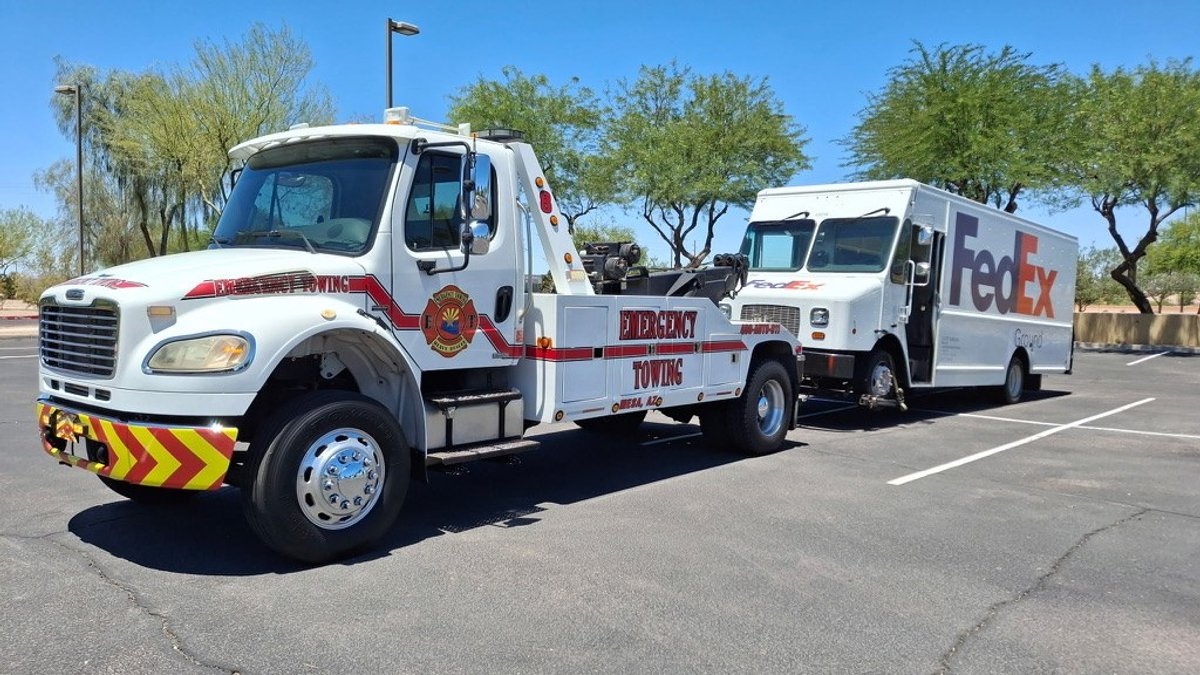
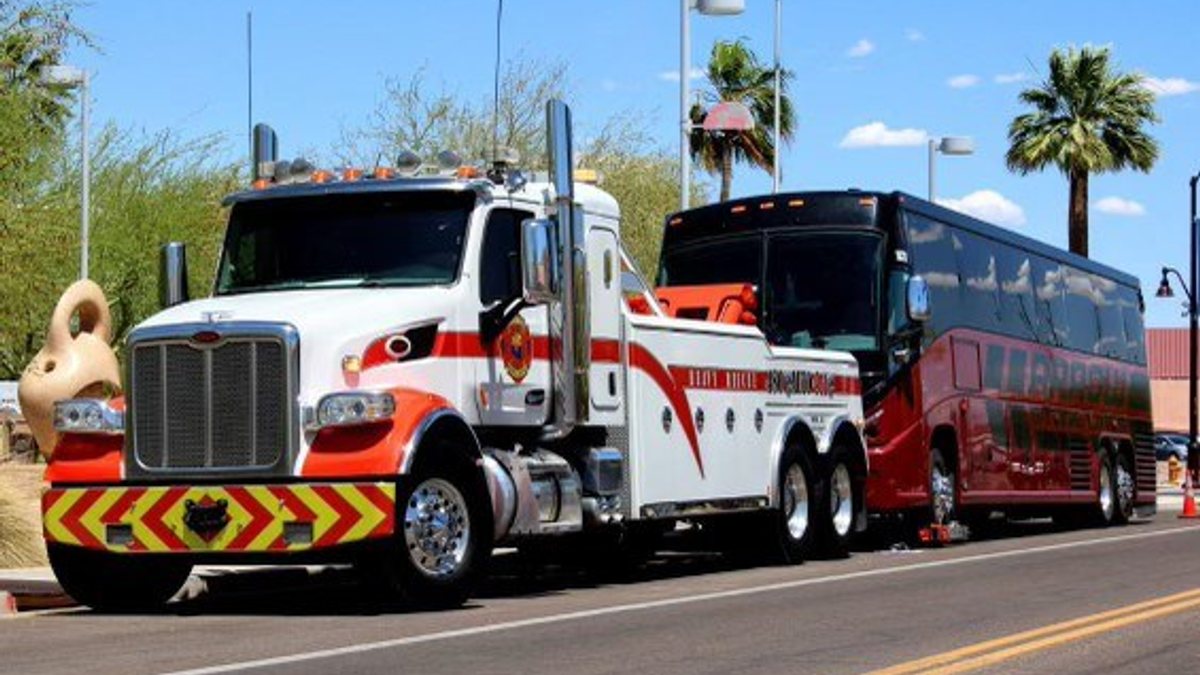
A refrigerated trailer at full weight had lost its drive on the northbound climb. The driver did everything right: got to the shoulder, set out triangles, and called for a heavy tow. Because this was a loaded combination vehicle, a light or medium wrecker was never an option — this was a job for the Heavy Rescue Division and a dedicated heavy wrecker.
Working the scene
Our operator’s first job on any heavy recovery isn’t the truck — it’s the scene. That means positioning the wrecker to shield the work area, setting out advance warning, and confirming the load is stable before anything gets hooked. Only then does the real work begin: caging the brakes, disconnecting the driveline so the tractor can be towed without further damage, and rigging to the manufacturer’s tow points.
Why the load matters
A loaded reefer can’t just be dragged. We confirmed the gross weight with the carrier’s breakdown desk before we rolled, matched the right unit to the job, and towed the combination port-to-port to the repair facility — with photos sent to the carrier along the way so their dispatcher always knew where the freight was.
The takeaway
Heavy recovery is planning, rigging, and patience — not just a big truck. If you dispatch for a motor carrier, program our Heavy Rescue line into your breakdown protocol now, before you need it: (480) AUTO-911. We run these recoveries across Arizona, day and night.
Related service
Semi-Truck & Bus Towing →Tractors, loaded trailers, motorcoaches, and school buses — Heavy Rescue wreckers, statewide, dispatched direct at (480) AUTO-911.