
When dispatchers, adjusters, and fleet managers talk recovery, the equipment names fly fast. Here’s the plain-English version of what each machine does and when it’s the right call — useful whether you’re stuck on the I-17 grade or writing a towing contract.
The heavy wrecker
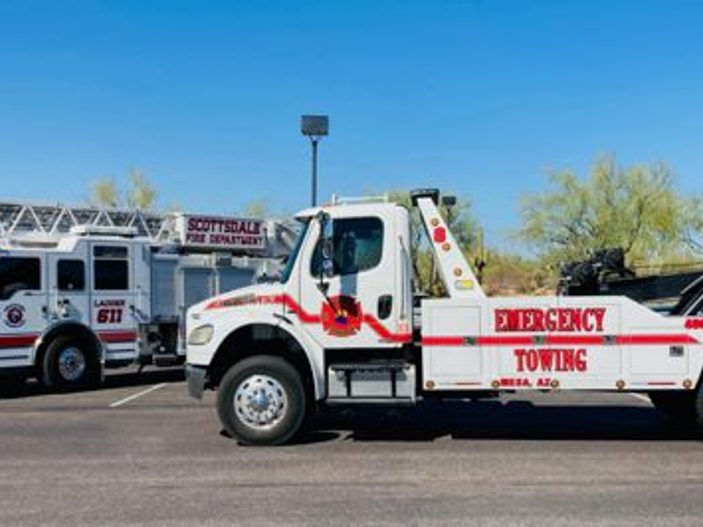
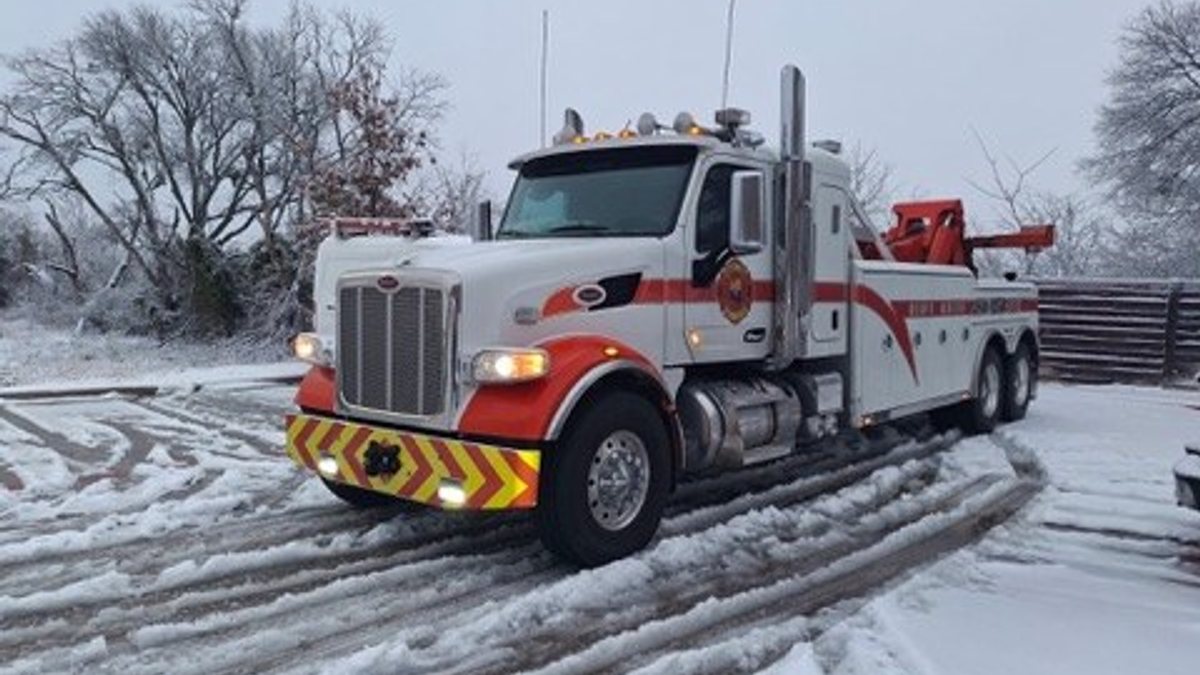
The centerpiece of any heavy towing operation: a Class 8 chassis with a boom and winches rated in the tens of tons. The boom lifts and drags; the winches pull vehicles back from where they shouldn’t be; the counterweight and outriggers keep physics on our side. When a loaded combination needs to move, this is the truck.
The underlift
The hydraulic arm at the back of a wrecker that slides under a truck’s axle or frame and lifts the end of the vehicle for towing. Modern underlifts are why heavy tows are damage-free: the disabled truck rides on its own wheels, connected at manufacturer-approved points. An extended underlift reaches beneath long rear overhangs — the reason motorcoaches and buses can be towed without touching their bodywork.
Caging brakes & pulling drivelines
Two phrases you’ll hear on every heavy scene. Air brakes lock when a truck loses air — caging them mechanically releases the spring brakes so the wheels roll. Pulling the driveline disconnects the driveshaft so towing doesn’t spin (and destroy) the transmission. Both are standard prep on our tows; if an operator skips them, that’s a bill for the truck owner later.
The Landoll (traveling-axle trailer)
A trailer whose whole deck tilts to the ground while its axles travel forward, letting low-clearance machines load at a gentle angle instead of climbing steep ramps. Scissor lifts, forklifts, containers, and dead trucks all move this way — it’s the workhorse of our equipment transport service, and you can see it working in our Landoll case study.
Winching, rigging & uprighting
Recovery — as opposed to towing — is about controlled force: wire rope, synthetic lines, snatch blocks that multiply pulling power, and anchor points chosen so the load moves where intended and nowhere else. A rollover is brought upright slowly, rigged to protect the trailer structure; rushing an uprighting is how loads get destroyed. Our winch-out service covers everything from sand to embankments, and the I-17 semi recovery shows the discipline on a real scene.
Duty classes in one paragraph
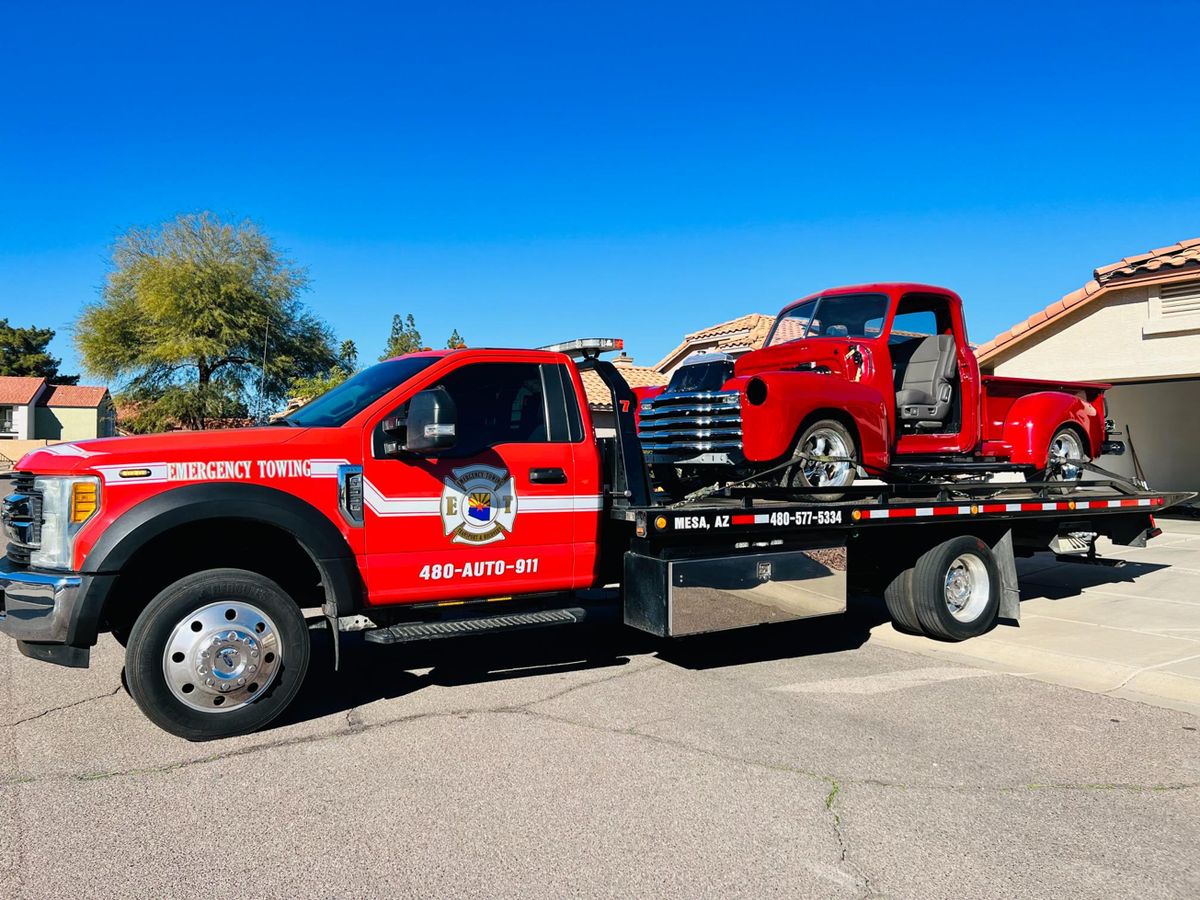
Light duty is cars and pickups; medium duty is box trucks, RVs, and work trucks — roughly 10,000 to 26,000 lbs; heavy duty is everything above: semis, buses, dump trucks, equipment. The class determines the truck, the operator certification, and the price — which is why dispatch always asks what you’re driving.
Why equipment depth matters for contracts
Fleets and agencies writing towing contracts should ask every bidder the same question: what do you own, and what do you subcontract? Our answer is on the capability statement — heavy wreckers, Landoll, and rigging in-house, statewide, under USDOT 4004745.
Need help right now?
Guides are for later — dispatch is for now. Live 24/7: (480) 577-5334 · heavy & commercial (480) AUTO-911